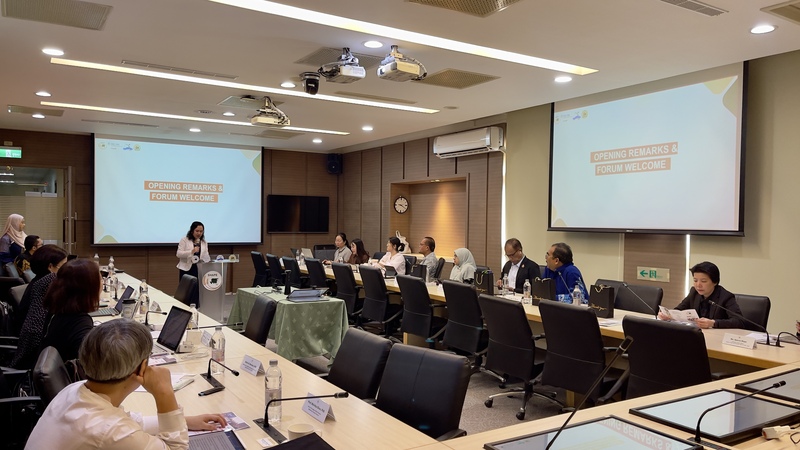
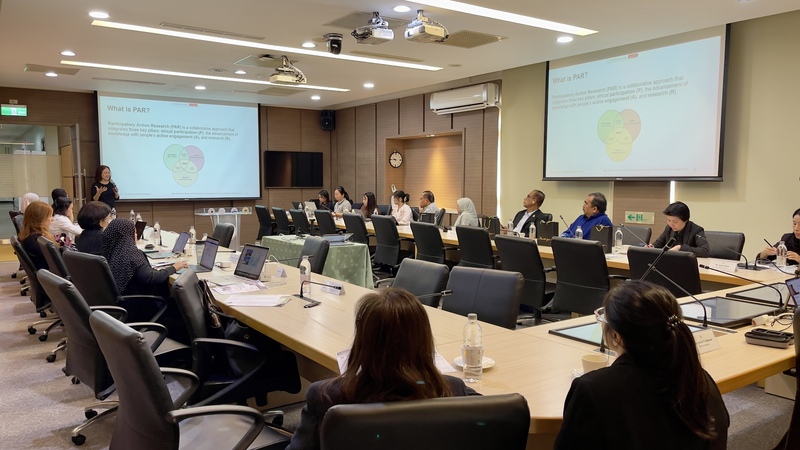
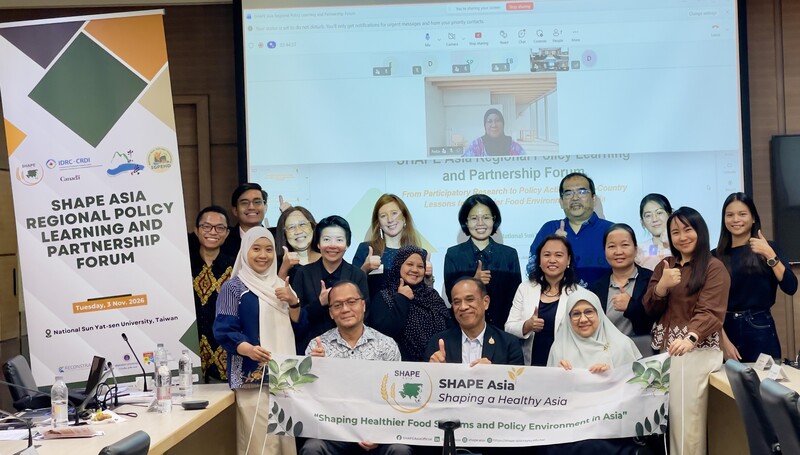
How can research, meaningful stakeholder engagement, and cross-country collaboration contribute to policy change and healthier food environments? On November 3, 2026, SHAPE Asia brought together researchers, policymakers, technical experts, and international partners for the SHAPE Asia Regional Policy Learning and Partnership Forum at National Sun Yat-sen University (NSYSU) in Kaohsiung, Taiwan. Building on the previous day's Regional Team Meeting, the forum provided a platform to exchange country experiences, connect evidence with policy priorities, and explore opportunities for collective action.
In her opening remarks, Dr. Elaine Q. Borazon, SHAPE Asia Project Lead, emphasized the importance of bringing researchers, policymakers, and other stakeholders together to generate evidence that informs real-world decisions. Professor Mei-Hua Chen, Dean of NSYSU's College of Social Sciences, highlighted the role of universities in addressing societal challenges through research, public engagement, and cross-sector collaboration.
Madiha Ahmed, Senior Program Specialist at International Development Research Centre (IDRC), Canada, recognized SHAPE Asia’s efforts to address country-specific challenges while facilitating regional learning, emphasizing the importance of stakeholder engagement and gender equity in transforming food systems.
A central focus of the forum was how collaborative research can generate locally relevant evidence and practical solutions to improve food environments. Professor Poh Bee Koon of Universiti Kebangsaan Malaysia introduced SHAPE Asia’s approach to working with stakeholders to identify challenges, develop solutions, and inform policy and practice. Country presentations illustrated how these efforts are taking shape across diverse settings. The Malaysia team shared initiatives on healthier food retail and responsible food marketing, including engagement with retailers, young people, and content creators. The Thailand team presented its work on developing practical guidelines for mobile grocery trucks that address nutrition, food safety, and sustainability while considering the realities of vendors and consumers.
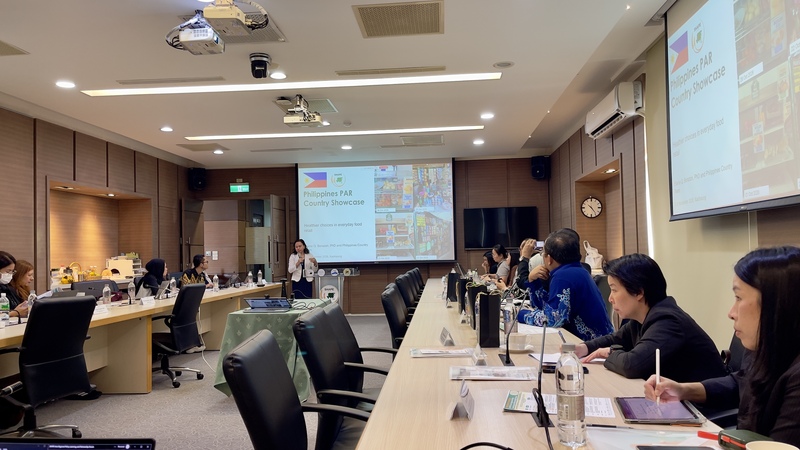
The Indonesia team highlighted gaps between existing school food guidelines and actual practices, generating evidence to inform improvements within and around schools. Meanwhile, the Philippines team showcased collaborative efforts to improve food retail environments through healthier product placement, behavioral prompts, and healthier checkout options.
Providing a broader policy perspective, the Institute of Policy Studies of Sri Lanka presented findings from applying the NOURISHING Policy Framework across SHAPE Asia’s five participating countries, identifying policy gaps and opportunities for improvement.
Engaging policymakers is essential to translating research into policy action. Their participation was central to the forum, creating opportunities to connect SHAPE Asia's emerging evidence with national and local policy priorities and explore practical pathways toward implementation. En Nazli Suhardi bin Ibrahim from Malaysia’s Ministry of Health and Suchart Sukcharoen from Thailand’s Department of Health shared perspectives from their respective countries. Dr. Helda Khusun from the Southeast Asian Ministers of Education Organization Regional Centre for Food and Nutrition (SEAMEO RECFON) contributed her technical expertise, while Jirah Asa M. Sideco from the Quezon City Health Department in the Philippines offered insights from a local government perspective.
Their contributions highlighted the importance of cross-sector coordination, locally relevant evidence, and practical considerations in policy development and implementation. Quezon City’s ongoing work toward a proposed healthy food retail ordinance, with public consultations and further policy refinement planned for 2027, illustrated how sustained collaboration between researchers and policymakers can support evidence-informed policy development.
Drawing together these country experiences and preliminary findings from SHAPE Asia’s pre-launch monitoring, Professor Anne Marie Thow of the University of Sydney, SHAPE Asia’s advisor and regional policy expert, highlighted how research evidence, stakeholder engagement, and cross-country learning can inform policy change, strengthen advocacy, and sustain regional collaboration.
Policy is not just a document. Policy is the way that governments translate their vision into action and change in the real world.
~ Professor Anne Marie Thow
Looking ahead to 2027 and beyond, discussions identified opportunities to strengthen regional policy dialogues, engage sectors beyond health, develop shared monitoring approaches, and adapt lessons from country experiences across different contexts. The forum also welcomed representatives from the Malaysian Friendship and Trade Centre (MFTC), the Manila Economic and Cultural Office (MECO), and the Thailand Trade and Economic Office (TTEO), reflecting the importance of international cooperation in addressing shared food and nutrition challenges.
While countries face different challenges, their experiences offer valuable lessons for collective action. By connecting research with policy processes, strengthening partnerships, and learning across borders, we aim to ensure that evidence extends beyond knowledge generation and contributes to meaningful and lasting change. Together with our partners, we remain committed to shaping healthier and more equitable food environments across Asia.