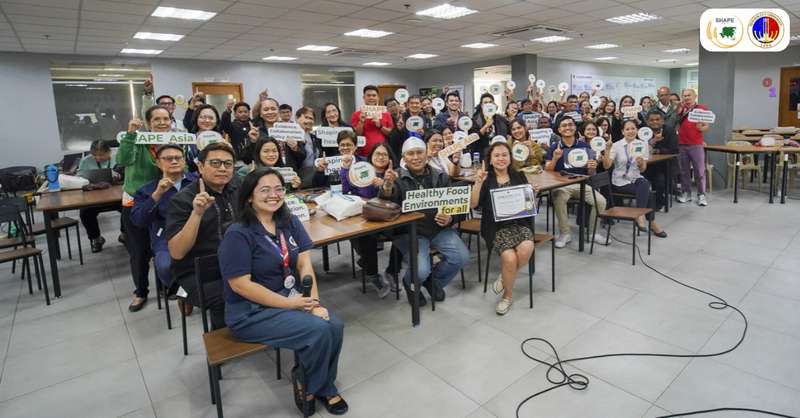
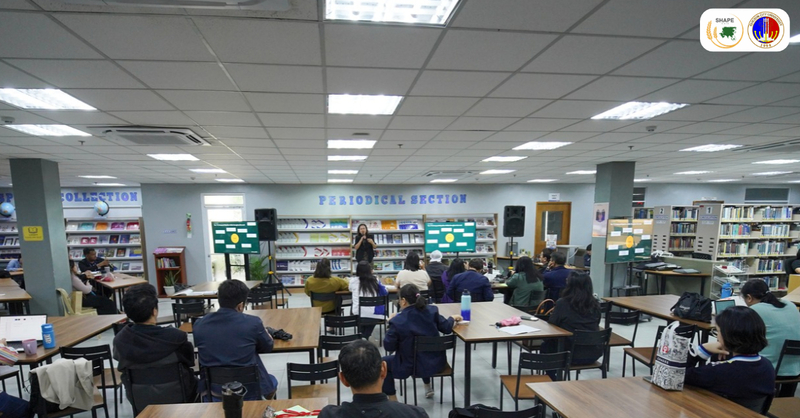
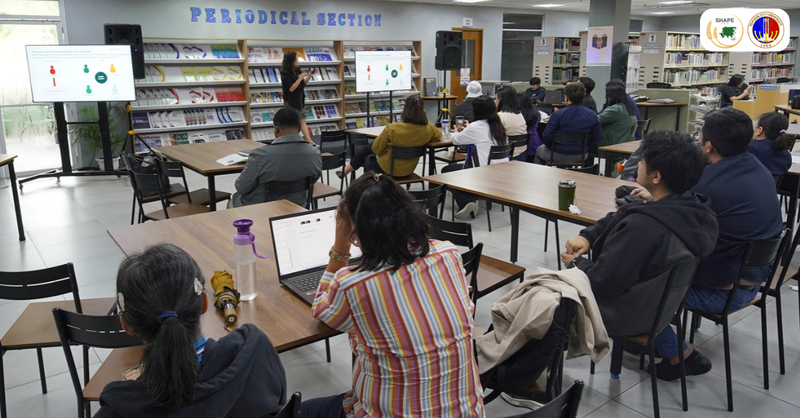
Understanding the food environments where people live, learn, and make everyday food choices is an important step toward improving them. Strengthening local research capacity can help generate evidence that reflects community needs and informs practical solutions. On August 7, 2026, SHAPE Asia participated in the Research & Extension Capability Advancement Program (RECAP) at Quezon City University (QCU), contributing to a capacity-building session focused on food environment research and assessment.
The session provided an opportunity to share knowledge on food environment research and highlight the importance of understanding local conditions that shape people's access to food and dietary choices.Local academic institutions have an important role in generating context-specific evidence, identifying challenges, and contributing to solutions that respond to community needs. Strengthening their research capacity can also support more informed decisions and sustained efforts to improve food environments.
The engagement also opened opportunities for potential collaboration between SHAPE Asia and QCU to strengthen local research capacity and support future food environment monitoring across communities and school settings. Connecting local research with regional learning can help identify shared challenges, exchange practical experiences, and build a stronger evidence base for healthier food environments.
At SHAPE Asia, we believe that strengthening research capacity and fostering collaboration are essential to creating lasting change. By learning from one another and connecting knowledge across institutions and countries, we can work together toward healthier and more equitable food environments across Asia.